


What happens when AI can do parts of the job you’ve spent years learning how to do?
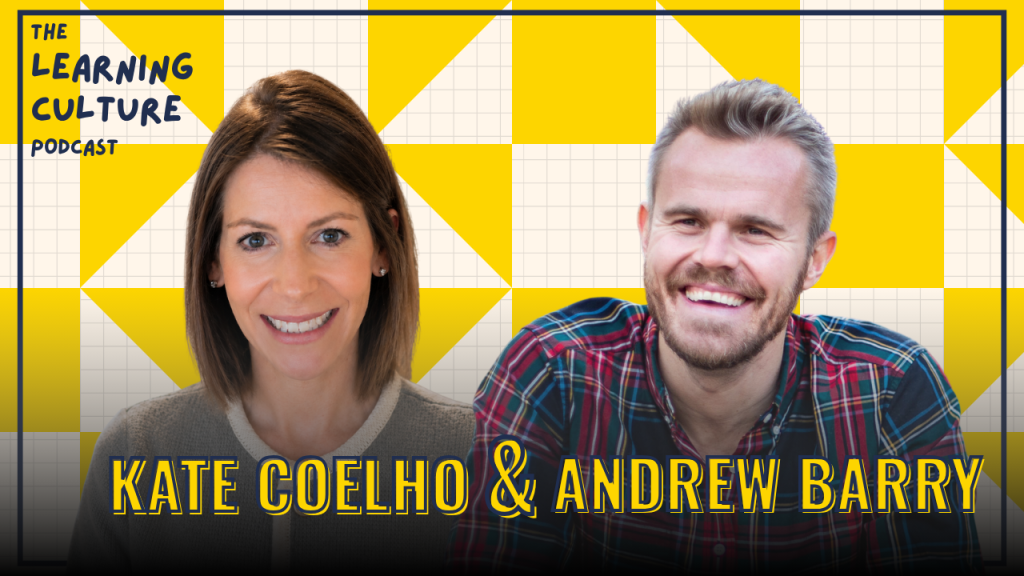
For many people, that question isn’t merely technical. It touches their sense of expertise, relevance, control, and even identity. Kate Coelho, Director of AI Change and Adoption at Microsoft, argues that AI transformation can’t be treated like a conventional technology rollout, because the tools and the end state are changing too quickly.
Instead of preparing people for a fixed destination, leaders have to help them build the muscle to keep adapting. In this conversation, Kate explains why apparent resistance to AI usually has something deeper beneath the surface, why psychological safety and leadership vulnerability matter more than ever, and how organizations can create space for people to experiment openly.
She also digs into one of the most urgent capability gaps emerging in the workplace: judgment. As AI makes it easier to produce polished work at extraordinary speed, how do you stop people from outsourcing their thinking, and how do you reward discernment and impact rather than adoption, volume, or velocity?
If you’re leading change with no stable end state in sight, this conversation will help you focus on what actually matters: whether your people are becoming more capable alongside AI, not less.
Full Episode
Guest Links
Show Notes
- [00:00 – 02:01] Introduction to AI transformation and its emotional impact
- [02:02 – 03:18] Kate’s experience settling into her role at Microsoft
- [03:19 – 05:21] AI’s impact on personal identity and expertise
- [05:22 – 08:28] The story of AI causing family disagreements
- [08:29 – 10:36] Resistance versus grief in AI adoption
- [10:37 – 16:40] Starting points for leading AI change
- [16:41 – 20:13] The shift from fixed end states to continuous adaptation
- [20:14 – 22:52] Building the muscle to adapt in a rapidly changing environment
- [22:53 – 26:49] The importance of judgment and questioning AI outputs
- [26:50 – 30:43] Protecting judgment and professional skepticism
- [30:44 – 33:20] Key message for leaders and change practitioners
- [33:21 – 35:02] Creating spaces for experimentation and learning
📚 Further reading
The series referenced in this episode is a weekly LinkedIn deep-dive by Kate Coelho into how AI shapes judgment at work:
- Week 1: If automation bias can show up in medical-grade work, with trained experts analyzing tumor cells, we should be paying very close attention to what happens in everyday enterprise work
- Week 2: Human in the loop only works if people know how to verify
- Week 2.5: Stanford Tested AI Models
- Week 3: AI-assisted certainty
- Week 4: Cognitive load
📄 From Wharton: “Thinking Fast, Slow, and Artificially”
👉 Continue the conversation with me on Twitter and LinkedIn.