

Accelerating Judgment Program
A practice-based learning system that compresses years of experience.
For mid-career professionals
The problem
Judgment used to take years of experience. Now AI handles many of the tasks we used to build it on faster than we can.
But someone still has to decide whether the confident answer on the screen is right, and whether it answered the right question.
Work stalls unless a senior person is attached to it. Decisions wait. Analysis gets produced and never acted on. Your most experienced people spend their weeks reviewing and unblocking instead of deciding. The people around them can gather information. They cannot yet carry an ambiguous problem to a decision others will act on.
What we teach
One loop, run often. Each turn moves a messy situation to a decision people act on, and builds judgment over time.
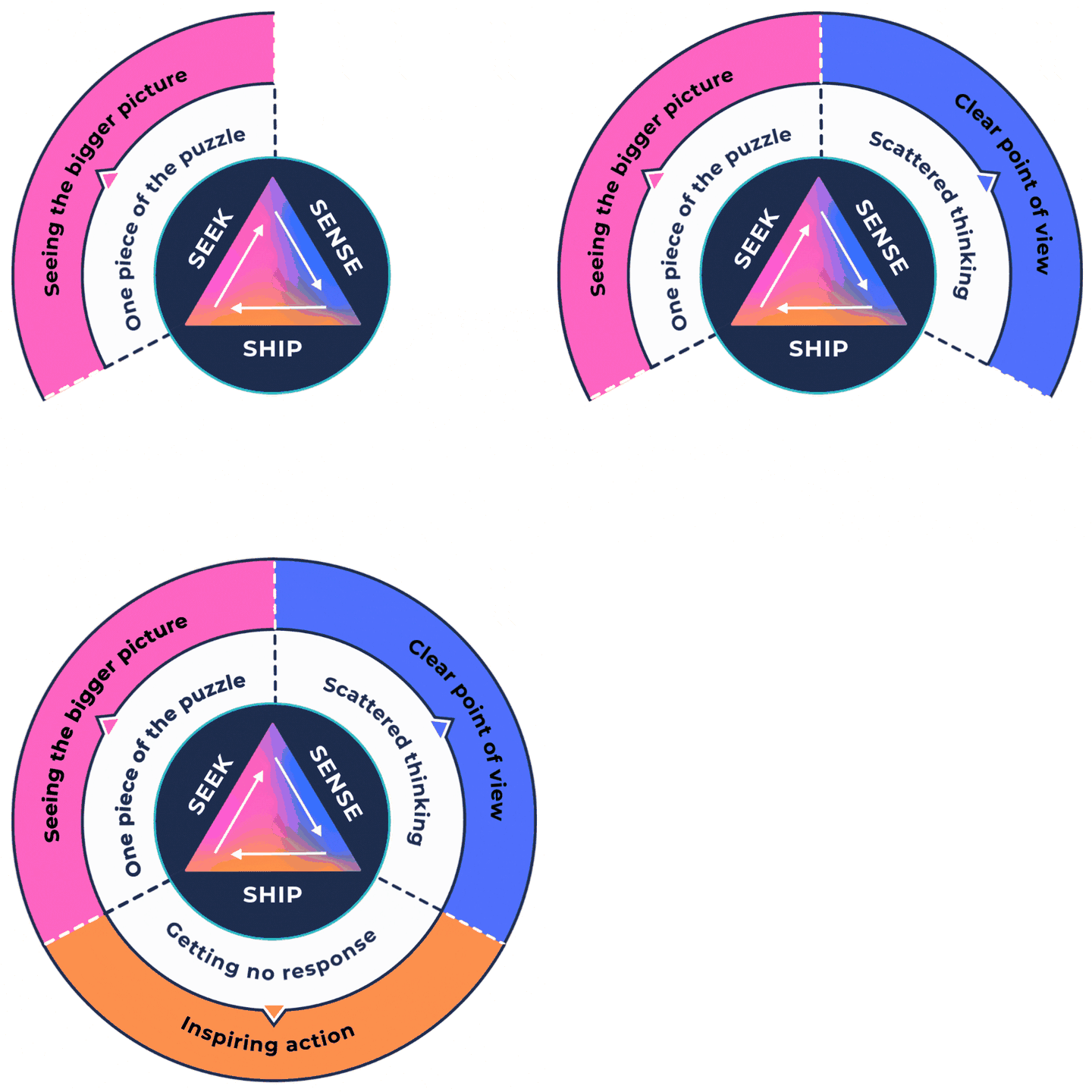
Underneath the three motions sit nine capabilities, each with tools attached.
Seek
Finding the real problem and the perspectives that reveal it
- ConnectBuild the relationships that give you access to what people actually think
- DivergeWiden the set of perspectives before narrowing to one
- EmpathizeUnderstand the problem as the other person experiences it
- Narrative Dialogue. Interviewing for the story rather than the summary.
- How and What questions. Delaying why, which puts people on the defensive before they have told you anything.
- Loop for Understanding. Paraphrasing back and being slightly wrong on purpose, which surfaces more than being right.
Sense
Turning conflicting inputs into a point of view
- ClarifySeparate what you know from what you assume
- StructureOrganize the pieces so the shape of the problem becomes visible
- ConcludeCommit to a recommendation rather than a summary
- MECE. Sorting into groups that do not overlap and do not leave gaps. In practice it takes a few passes.
- The Problem Pyramid. Five steps from raw material to one recommendation: label, eliminate, group, draw the so-what from each group, land a single insight.
- Build bottom-up, communicate top-down. The order you reason in is not the order you present in.
Ship
Landing the decision with the person who has to act on it
- ShiftMove from your frame of reference into theirs
- AdaptChange how you communicate to match how they take information in
- HookGive them a reason to act now rather than later
- Perspective shifting. Adapting your communication to the way others think and what they care about.
- The Perspective Hook. Four questions that build the case: why now, what action, what benefit they care about, what happens if nothing changes.
- Curse of knowledge checks. Catching the gap between what you said and what they heard.
How we teach it
Four elements, running together.
Activation
A two-hour session that shifts the mindset from “my view is complete” to “my view is partial.”
- Offered across multiple time zones
- Whole populations at once
Tools
The teaching moves out of the live room so live time goes to practice.
- Short video explainers
- Worked examples on real problems
- AI companion that asks rather than answers
Coaching
One-hour labs where small groups work on live problems they brought with them.
- Cross-functional groups by default
- Runs through the whole program
Community
A cohort channel where participants work in the open, so the practice becomes visible.
- Learning in public across functions
- Outlives the program itself
The principles behind it
The elements above are the visible part of the design. Six choices determine whether any of it survives contact with a normal working week.
-
Activate the mindset shift first
Someone who believes they have the full picture has no reason to seek, no reason to question assumptions, and no reason to change how they communicate.
-
Work on live work problems
Every session runs on a real, unresolved situation. A stakeholder ask, a recommendation, an analysis. Sessions are the work.
-
Cross functional cohorts
Others see your problem differently, which is the point. People leave with working relationships across functions they used to only email.
-
Labs run on peer practice
Small groups work each other’s real problems while a coach listens and guides. This is where the learning transfers.
-
Lightweight framework
We supply a shared language and then get out of the way. Most of the breakthroughs come from a peer conversation.
-
Reinforce and sustain
Behavior change decays without practice. Participants continue to use an AI companion and human thought partners to work on live problems.
What gets measured
We measure on five layers.
| Self | Pre and post self-assessment across the nine capabilities, returned to each participant as a spider chart |
| Manager | The participant’s manager rates the same nine capabilities, which surfaces the blind spots a self-rating cannot |
| Application | Concrete examples of tools used on real work after the program, tracked tool by tool so we can see which ones actually transfer |
| Network | Growth in working relationships across functions inside the cohort |
| Impact | Business outcomes over a longer horizon: retention, engagement, promotion rates |
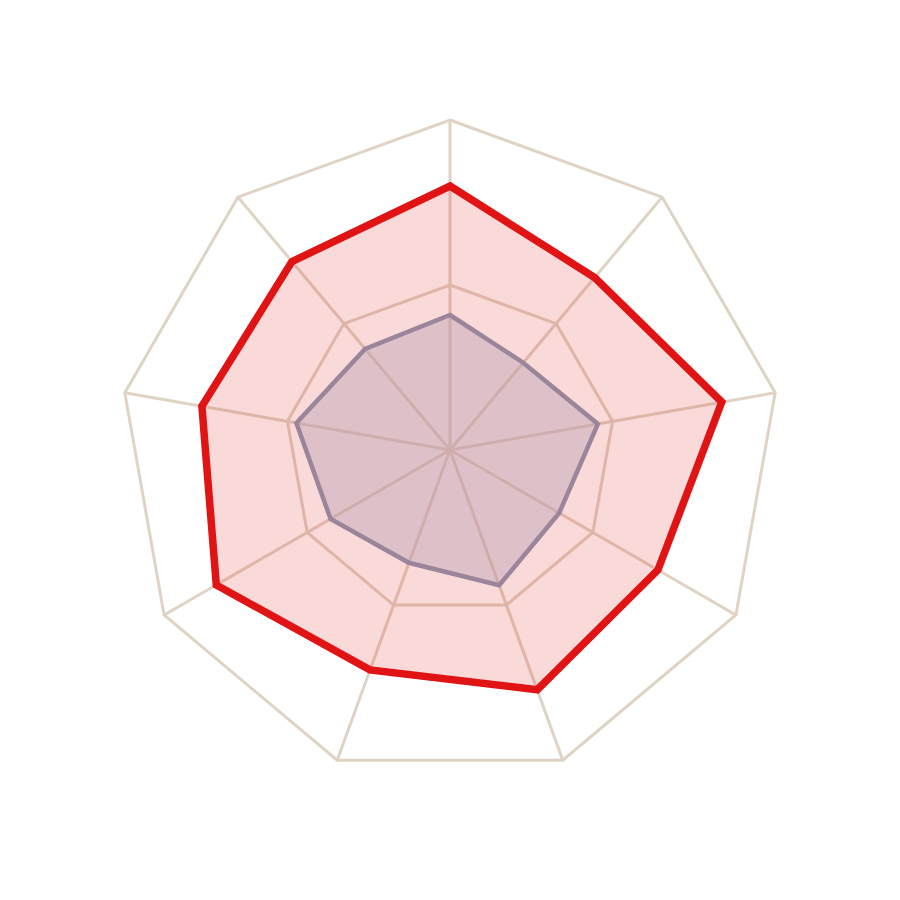
Measured capability growth across six cohorts at a B2B marketplace client, on the self and manager layers combined.
Engagement models
Three ways in.
Assess
For teams that want to size the gap before committing to anything.
$8k to $15k By team size and scope- Structured assessment across all nine capabilities
- Team capability map by motion
- Gap profile naming the two or three highest-leverage shifts
- Leader readout comparing your read of the team against their own
- A recommended four-week operating rhythm you can run yourselves
Activate
For organizations running judgment development as a program with measured outcomes.
From $40k Per cohort, typically 15 to 20 participants- Discovery with participants, managers, and the learning team
- Worked examples built from your context
- Two-hour activation, the full tool set, and the lab series
- Cohort channel and AI companion for every participant
- Measurement across all five layers
- Manager activation and conversation guides
Scale
For organizations at a scale where external delivery will never reach everyone.
Custom Scoped to population and coach count- Licensed tools and facilitation materials
- Coach certification for your internal team
- AI companion seats, priced per person per year
- Program design and rollout support
- Methodology refresh as the practice evolves
We believe in this so much we put our fee on the outcome
Before the work starts we agree the success criteria together, along with what each side has to do to hit them. Yours will involve manager participation and protected time. Ours is the capability movement itself. If we miss on the success criteria after both sides meet our accountability targets, we refund our fee.
How engagements start
Every engagement starts by assessing. We do it first because designing a program before you know which of the nine capabilities is the real constraint is guesswork with a budget attached.
If a program follows, the assessment has already produced the baseline for the self and manager layers, so measurement starts from real data rather than from a survey nobody remembers taking.
Ready to start?
A short conversation is enough to tell whether this is a fit. If it is not, we will say so.
Book a 30-minute call